THE PLAYBOOK · EEQUN
How to play Futoshiki
Make Futoshiki your next activity in the game library. Place 1–4 once in each row and column while obeying every inequality. Choose a clear next step rather than rushing through the instructions. Treat the first round as a chance to learn the controls. Look at what changes after your first action.
Twelve 4×4 puzzles with fixed starter values.
Try a deliberate move
After a move, check what changed. Decide which rule explains the new state before acting again. Keep the objective visible.
Your goal
Place 1–4 once in each row and column while obeying every inequality. Read that aim before choosing your first action. Follow this game’s rules rather than another version’s.
Step by step
- Select an editable square.
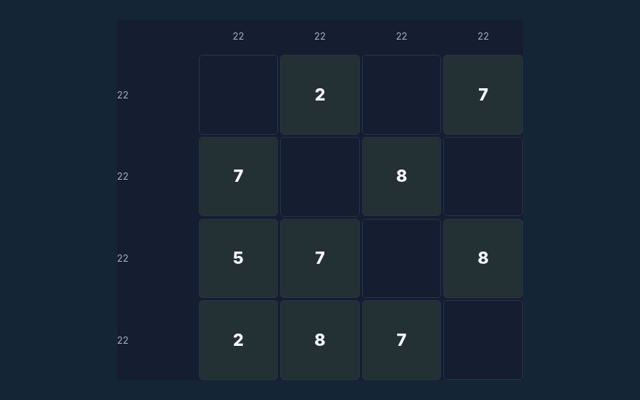
- Read inequalities by their row/column coordinates below the board.
- Enter 1–4.
- Check puzzle verifies both Latin-square rules and inequalities.
Controls
Click or tap squares or graph edges. Number boards include a digit pad. Undo reverses the previous change; Check puzzle validates the solution. Keep the playing area visible while using these controls. Make sure you are interacting with the game rather than the surrounding page.
A useful example
r1c2 < r1c3 means row 1 column 2 is smaller than row 1 column 3. Apply the same reasoning to the position in your own round. Take a moment to compare.
Watch out for this
An inequality specifies order, not an exact difference. A different version of the game may use a different rule. Read one step at a time and try it on the playing area. Match the instruction to the control you use.
Common questions
While reading the Guide, what is the goal of Futoshiki?
For clarity: Place 1–4 once in each row and column while obeying every inequality.
For a quick reminder, how do I control Futoshiki?
Click or tap squares or graph edges. Number boards include a digit pad. Undo reverses the previous change; Check puzzle validates the solution.
What example helps explain Futoshiki?
The key detail is this: r1c2 < r1c3 means row 1 column 2 is smaller than row 1 column 3.
What should I watch out for in Futoshiki?
The key detail is this: An inequality specifies order, not an exact difference.
When I return, what format does Futoshiki offer?
Keep this in mind: Twelve 4×4 puzzles with fixed starter values.
Before I begin, which play mode does Futoshiki use?
Here is the relevant explanation: The mode on this page is Solo. Same-device play uses one screen; this game library does not provide internet matchmaking.